Although the U.S. reportedly tested an operational hypersonic flight vehicle in cooperation with Australia last year, statements made by Air Force Materiel Command commander, Gen. Ellen Pawlikowski, on Tuesday seem to indicate that America is significantly behind both Russia and China in the race to field capable hypersonic platforms.
Hypersonic velocities, or speeds that exceed Mach 5, have gained quite a bit of public attention lately, in large part because both China and Russia already have hypersonic capable missile platforms within their arsenals. These missiles travel at speeds that significantly reduce the effectiveness of existing missile defense systems, making them a legitimate threat to America’s fleet of massive super carriers. The Navy has already begun incorporating multiple new programs into their budgeting and combat strategies, all aiming to offset the advantage these hypersonic platforms offer America’s opponents, but some have argued that the most important thing the U.S. can be doing to counter these hypersonic threats is to develop capable platforms of our own.
However, Pawlikowski characterized America’s hypersonic efforts as seemingly in their infancy — placing a significant emphasis on understanding what hypersonic velocities will do to an aircraft or missile and suggesting that plans are underway for actual flight tests “within the next couple of years.”
In contrast, China’s hypersonic DF-21D, a missile that as developed with America’s Nimitz and Ford class carriers specifically in mind, has been in service since 2010. Although questions remain regarding the targeting apparatus such a platform would require to accurately sink even such a large vessel from nearly a thousand miles away, there’s no question that the missile can travel at speeds well beyond the hypersonic barrier — with some claims placing its collision speed at nearly Mach 10. At such a velocity, the kinetic energy transfer of the impact alone would be sufficient to sink a carrier, with or without any explosive ordnance.
Meanwhile, at a media breakfast in Washington, D.C., Pawlikowski explained that the Air Force is now working in conjunction with the Defense Advanced Research Projects Agency (DARPA) on “the ability to get to that speed and then understanding that speed.”
Although Pawlikowski seemed to be trying to convey the Air Force/DARPA hypersonic initiative as promising, even she couldn’t help but address the limitations these endeavors face in terms of budgeting and expectations. She believes rapid prototyping would require an understanding up front that not every prototype funded will ultimately result in a functional weapons platform.
“One of the keys to prototyping is you may not buy it, and that’s a hard thing for us … to go in and say, ‘We’re going to spend money to go do this, and we may not do anything with it afterwards.’”
It’s difficult to believe that the United States is still at the “drawing board” stages of hypersonic platform development, particularly as nations that are not particularly renowned for their advanced military technology are rapidly outpacing the United States. Russia’s Avangard glide vehicle, for instance, is expected to enter service by 2020, and their Kinzhal hypersonic weapon system has already taken to the skies.
“The question now … is when are we going to take that first big plunge and invest some real dollars into a prototype, with the understanding that we may not buy anything when we’re done?” She said. “The key to this is to be willing to go out and do something and not spend two years figuring out what the requirements are before you do it,” Pawlikowski said.
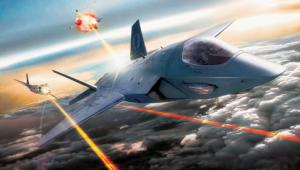
Image courtesy of the U.S. Air Force








Join our community. To comment on this article please join/login. Here's a sample of the comments on this post.
I'm reminded of so many idiot generals during our civil war. The SR-72 could be in dev. The Boeing X-51 flew in 2010 and 2013. Things probably went black after that, as China became more belligerent. Now with a non-traitor in the white house, policies may have improved to fund R&D, not give it away, like Bill Clinton did. There is no question China is innovating in many fields. There may be more Christians in China that in the United States. But what policies will the un-elected leaders of China policies be towards their neighbors on the 9-dash and the U.S. I'm all about another "gap" with a potential enemy, but is this fake news alex, or click bait? Just kidding <3
Seen. Looks sorted now.
@sofrep team: What happened to the Niger AAR. As I switched from my phone to PC after reading through it, the page refused to load and now it's no longer on the site. Did you pull it due to high traffic, OPSEC or did someone DDOS the site?
Good question, RB. I was looking for that article as well. The site must have had a problem earlier because I couldn't even access it for awhile.
Wow that kind of gives whole new meaning to "you sunk my battleship". A collision speed of Mach 10? It concerns me when we are behind the gun (pun intended) in any weapons technology. When Russia is already launching hypersonic missiles and we are still at the drawing board, we have a problem. Even if there is question about the targeting platform, we haven't even got an idea off the table. And based on how long it takes to develop new technologies and the expense of it all (F-35 anyone), it is really disconcerting to read this news.