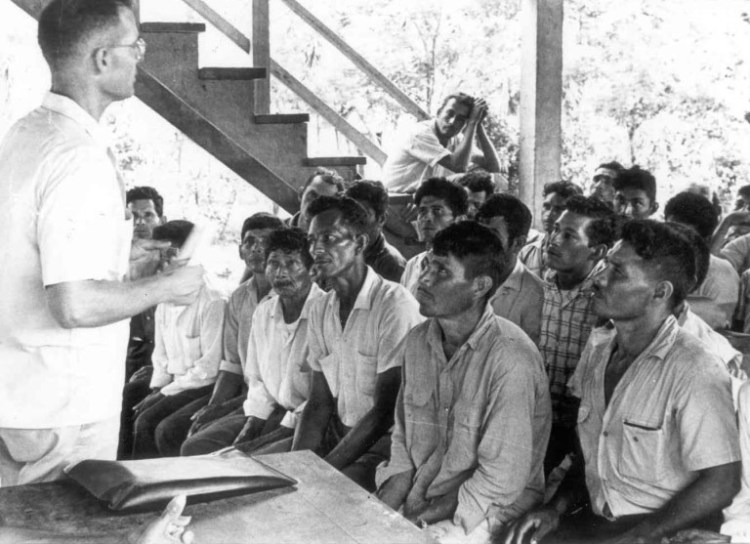
Father James F. Carney was captured in Honduras by the military during Operation Patuca River in late August of 1983. By his own admission, he was a guerrilla fighter with the Armed Forces of the People, or FAP, led by convicted Honduran terrorist Dr. Jose Reyes Mata.
Carney, 58 years old, had served as a Jesuit priest in Honduras for more than 18 years. A champion of the poor and an advocate of Liberation Theology, he became a lightning rod for mobilizing and organizing on behalf of those to whom he provided social and religious leadership. So much so that in 1979 his Honduran citizenship—obtained in conjunction with his formal renunciation of his U.S. citizenship—was revoked and he was deported to the United States.
“Fr. Jim never forgot his beloved Honduran poor; when he had the opportunity to accompany a group of Honduran “freedom fighters” who were crossing from Nicaragua to Honduras in July 1983, he welcomed the chance to return with them as their chaplain. Fr. Jim did not carry arms.†–University of Detroit Mercy
What was the reason for his arrest and deportation? Per his autobiography “To Be a Revolutionary†(Harper and Row, 1985), Carney tells us why the Honduran government took action. “The Ministry of Government and Justice, through investigations of the Immigration Office, states as a fact that Mr. James Francis Carney, known as Padre Guadalupe, not only imparts Catholic doctrine, but he also dedicates himself to the propagation of dissociating doctrines and ideas which hurt the organized government of the country.â€
This decree was dated March 19, 1979. However, the good padre wasn’t located and arrested until November of that same year. Why the delay?
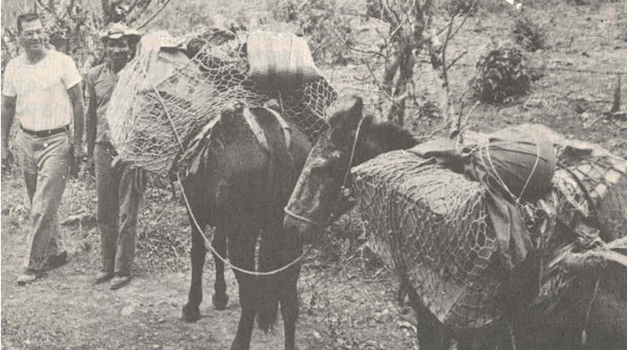
Carney had formally met with then-Colonel Gustavo Alvarez Martinez, the military commander of the region. The head of immigration was also present. Carney was warned about his activities, directed to report to immigration with his most recent documentation, and “…to stick strictly to the work of the Church.†The padre agreed to the conditions and reported to immigration in San Pedro Sula the next day, where he was warned by immigration again.
According to Carney, after he left immigration, “I returned to continue as before with all of my activities.†This was May 1979. He was soon on the run. Knowing that the Honduran National Police, or FUSEP, was searching for him, Carney used his friends and other clergy members of the church to hide him. This way, he was able to remain on the lam for more than eight months.
Upon his arrest and deportation in November of 1979, the priest was flown to Miami and subsequently made his way to a Jesuit retreat in Saint Louis, Missouri. For eight days he ruminated on the inequity and unfairness of the Honduran government’s actions. He also felt betrayed by several Jesuit priests in Honduras that had actively called for his expulsion from the country. He also felt betrayed by the National Association of Honduran Campesinos (ANACH), with which Carney had once been exceptionally active. Over time he’d become so difficult to work with, the association’s leadership also wanted him gone.
His Jesuit order in Detroit, Michigan, then offered him the opportunity to go to Nicaragua and serve the church there. He gladly accepted. Through an administrative rule that allowed him to obtain a provisional U.S. passport because of his status as a clergyman—despite having renounced his U.S. citizenship and having had his Honduran citizenship revoked—Carney left the United States for Managua, Nicaragua, now under Sandinista rule.
The Triumph of the Sandinista Revolution
“I felt myself so identified with them [the Sandinistas/FSLN], their fight for liberation was so
thrilling. I had so many Honduran friends helping them, that I can say that July 19th [1979]
was the most jubilant day of my life up until then. All my revolutionary friends sang and
shouted with me: ‘If Nicaragua won (their liberation), El Salvador will win, then Guatemala, and then Honduras too will win!â€
It was in Nicaragua where Padre Jim Carney became wholly committed to becoming what he called a “Christian Marxist†and expressed in writing his intent to wage revolution wherever he could. “In the actual process of making the revolution, the Nicaraguan Christians solved the theoretical problems of whether a Christian can be a Marxist and can fight in a civil war,†he wrote.
“If being a Christian demands being a revolutionary and a socialist, and to be a revolutionary and a socialist one has to use the Marxist-Leninist science of analysis and transformation of the world, then a Christian needs to understand Marxism.†Carney’s process of self-enlightenment was well fueled during his two years with the Sandinistas. Jesuit priests Miguel D’Escoto, Ernesto Cardenal, Fernando Cardenal, and Egdar Parralles had preceded him, taken up arms, and fought during the revolution in Nicaragua, becoming senior commanders and then politicians with the FSLN once the insurgency toppled the Somoza government.
All four were disciples of Liberation Theology as well as Christian Marxism. There is little doubt Padre Carney spent many hours in discussion with his Sandinista mentors. In turn he composed his own Christian Marxist Revolutionary manifesto, at night, by candlelight, in barren, hand-built, hermit-like shacks.
In the June 1987 issue of Crisis Magazine, Padre Ernesto Cardenal, in his last year as Nicaragua’s Minister of Culture, reinforced the thinking of James Carney regarding priests following their own conscience as Christian Marxists.
Question: How do Catholic priests react to these sanctions?
Cardenal: Those of them who are deeply convinced of the need for revolutionary changes don’t
allow themselves to be intimidated. And they are in the majority. It is, in fact, a matter of
individual conscience and fidelity to the Gospel, for if I am convinced that the orders of the
Vatican and even those of the Pope himself are in contradiction with my conscience and with
the orders of the Gospel, then I cannot obey.
In his book, published after his disappearance and now confirmed death, Carney constantly quotes Marx or Lenin. Otherwise he expresses his admiration for Che Guevara. In his chapter titled “How Can A People Be Liberated?†the padre offers, “I liked the saying of Che Guevara (another Marxist saint, who gave his life for the poor guided by the Spirit of Jesus without knowing him) that ‘when the Christians in Latin America take seriously the revolutionary teachings of the gospel, the revolution will be invincible.’â€
Carney’s message, once published in the United States, reached many like him who were searching, out of frustration and anger, for social change on behalf of the poor in Latin America. Good works weren’t cutting it. Prayer wasn’t cutting it. Letter writing and taking Americans or other foreign politicians on tour after tour of exceedingly poor villages and neighborhoods were proving fruitless. Padre Carney’s teachings and his permission as a born-again Christian Marxist to join and become active in armed revolutionary armies stirred their emotions and rejuvenated their will.
In 1989, one of his readers, Jennifer Jean Casolo, would be arrested during the Salvadoran FMLN’s 1989 Final Offensive for her role as an active and important urban guerrilla with the ERP. She presently lives and works in Guatemala.
On December 23, 1982, Padre Carney slipped into El Salvador and met with guerrillas of the FMLN. He drafted a message that he broadcast over Radio Venceremos in support of the “solidarity that there is between the oppressed Salvadoran and Honduran peoples.†At the closing of his message he prayed aloud to his listeners that “the North Americans leave us in peace!â€
A little-known fact is that, upon his embracing the revolution in Nicaragua and taking up residence there, he requested guerrilla warfare training. As a WWII veteran who fought in Europe as a combat engineer, Carney understood conventional warfare but not its counterpart, unconventional warfare. In June 1981, he was sent to Cuba and underwent training at the Special Troops School at Pinar del Rio. This was the same unconventional, or guerrilla, warfare school that would become home, beginning in 1982, to the first 96 members of Dr. Jose Reyes Mata’s ill-fated incursion to wage war in Honduras in 1983.
Carney joined the FAP as its chaplain and as an armed combatant. In his book he shares how the two roles complemented each other. “I will have to give up being a Jesuit for a time, until the triumph, because the present laws of the Society of Jesus do not permit a Jesuit to to be a guerrilla fighter.” Carney goes on to explain he did not want to take this step but neither did he want to be expelled by the Society of Jesus. It is important to understand this, especially in the light of the utter nonsense and deliberate attempt by his supporters (some of whom have benefited financially for years since his death) to present Padre Carney as simply a social activist who wanted to provide religious comfort for the Honduran guerrillas of the FAP.
As early as 1975, Carney, in his own words, had transformed himself into a revolutionary. “No longer was I anticommunist, no longer did I fear fighting back; rather, as a Christian revolutionary, I wanted to help the guerrilla war for the independence of Honduras.â€
Father Carney on Killing for Christ
“The Church has always taught that one can use violence and can even kill in self-defense, if it is necessary.â€
“The Church teaches that a people can take up arms in a general insurrection when the four conditions of traditional moral theology for just war are fulfilled.â€
“One of the final points of my metamorphosis as a revolutionary was to understand that in Latin America it is the duty of all true Christians to sooner or later enter into and help as they can the armed revolution.â€
“Having sworn during World War II that I would never kill a person, and after being a disciple of Gandi and his nonviolent methods of combatting injustices, it still took me a few more years to clarify my ideas about a Christian and his or her place in an armed revolution.â€
“How can an apostle of Christ encourage others to risk their lives in armed battle and stay at home, or go to the battlefront but without arms to help in battle…a Christian sometimes has to fight in order to promote their liberation or to defend them, the priest, who is supposed to be the most exemplary Christian, should give an example of this kind of Christian love also.â€
Christian Communism: Welcome to the Revolution
Father James Carney, or “Padre Guadalupe†as he preferred to be called, was issued an M16 rifle and a pistol before he crossed the Rio Coco into Honduras as a combatant with the Marxist FAP column in mid-July 1983. His inclusion with the FAP was rooted in the immense popularity he enjoyed in Honduras among the poor and those many grassroots organizations dedicated to the same ideals, goals, and objectives Carney embraced. When his Honduran citizenship was revoked and Carney deported, more than 30,000 signatures were gathered on one petition alone demanding his return. FAP commander Reyes Mata recognized the vast potential Carney possessed in terms of jump-starting the all-important logistics, funding, intelligence, and recruiting networks the FAP would need.
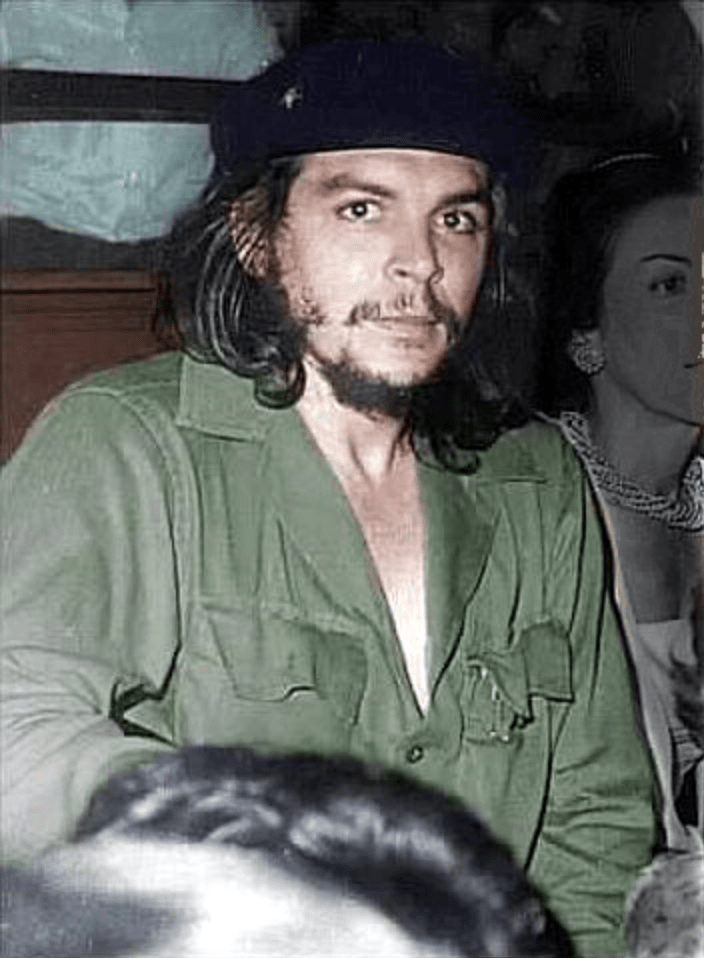
Unknown – Museo Che Guevara (Centro de Estudios Che Guevara en La Habana, Cuba)
Contrary to the apologists’ pleas that Carney was both too old and too frail to fight as a guerrilla, his 18 previous years of living among the poorest of the poor had hardened him physically as well as mentally. Throughout the campaign and despite weariness, hunger, pain, and near exhaustion, the former WWII combat engineer never quit when others half his age did.
Many reports have claimed that Carney starved to death in the jungle. For a man used to literally living off the land, in both Honduras and in Nicaragua, this claim rings hollow. Honduran campesinos who knew “Lupe†have asserted that he would only “starve to death if he were confined within four walls.â€
In fact, James Carney was captured by Honduran Special Forces on or about August 28, 1983, near the town of Nueva Palestina. He was transported to El Aguacate Air Base—along with Dr. Reyes Mata, the FAP’s overall commander; Commander David Baez, one of two Sandinista combat advisers with the column and a former Green Beret; and roughly 33 other captured guerrillas—where he was imprisoned. Carney, along with the others, was tortured and interrogated by members of the Honduran military intelligence battalion MIB 316. General Gustavo Alvarez Martinez, head of the Honduran military, subsequently ordered all the
prisoners, to include Jim Carney, be executed.
Not wishing to repeat the mistakes of the Bolivian Army and government in 1967, where they allowed Christ-like photographs to be taken of Che Guevara’s body after his execution, the Hondurans allowed no press, no photographs, and “disappeared†the bodies as well. All of the guerrilla corpses were loaded into waiting helicopters and flown back across the border with Nicaragua, where they were dumped into the triple-canopy jungle below.
Still, the final words of Father James Carney, written by candlelight, continue to echo and encourage Christian Marxists who would become armed revolutionaries: “The socialism that we want is a necessary step toward this Christian Communism. In the twentieth century there is no ‘third way’ between being a Christian and being a revolutionary. To be a Christian is to be a revolutionary. If you are not a revolutionary, you are not a Christian!â€

Join our community. To comment on this article please join/login.
Here’s a sample of the comments on this post.
Greg,
Great article, I have reading to do on this entire time in history. There is just so much that I never knew or understood. Today we have the internet and can cross reference multiple opinions and articles. Back in the 80’s, I lived in the country with one TV station no radio reception. Working full time, school full time, and mothering full time. And starved for information. Today I’m trying to catch up. Headlines in those days as I recall were about murders of nuns, missing students, the contra’s. Thank you, really enjoy the reading.
Padre Carney must have skipped Communism class the day they studied Marx on religion.
Marx: Religion is the opiate of the masses.