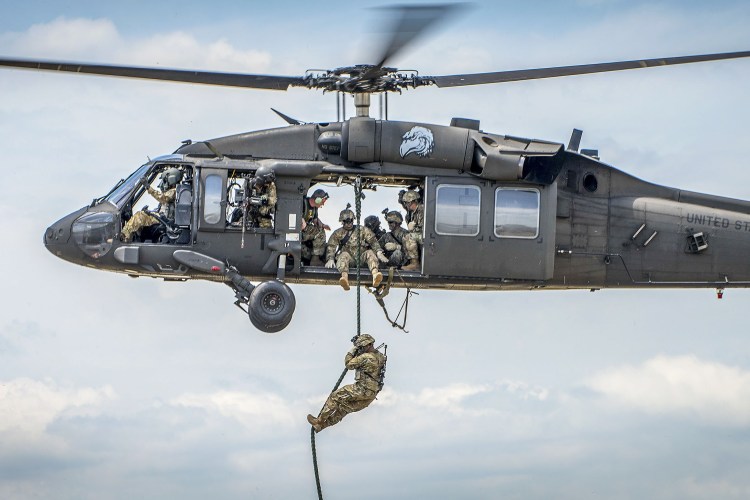
Special Operations Forces (SOF) are known for their physically and mentally tough selection and assessment processes. However, for those few who can make the cut and enter into the vaunted ranks of a special operations unit, the benefits are significant. Special operators get to train and play with the most advanced military toys available. They get to attend all kinds of specialized schools. Indeed, when it comes to SOF, the sky is the limit concerning opportunities while in uniform. The benefits transcend military service and also apply to the civilian world. SOF veterans are more likely to land a job with a six-figure salary or go to that Ivy League school. The military has implicitly used these facts to recruit more people, but it’s a double-edged sword for current operators who seek to jump ship and enjoy the fruits of their labor in civilian life.
Compounded by the better financial opportunities the civilian world offers, there is also the considerable strain that comes with almost two decades of war. Repeated combat deployments have been the reason behind many operators’ decision to transition out of the military. Selecting and training a commando is an extremely lengthy and costly process, and the U.S. Special Operations Command (SOCOM) is searching for ways to improve retention among its ranks. As a result, the military contracted the RAND Corporation to do a study on the retention of SOF commissioned officers, for whom opportunities on the civilian side are better compared to enlisted operators, as a result of their added responsibilities and leadership training.
RAND focused its study on two specific questions:
- How can policymakers assess how alternative special & incentive (S&I) pay adjustments affect the retention of SOF commissioned officers?
- How effective would the use of S&I pay adjustments be in encouraging retention of SOF officers beyond the required service commitment after training?
The study used data spanning 22 years and primarily focused on the Army and Navy SOF. The report concluded that if the Army offered Critical Skills Retention Bonuses (CSRB) to officers (with 19 or more years of service), more than 11% would remain in uniform. For the Navy, which already offers CSRBs to officers, the authors concluded that a 25% increase in the dollar amount would result in a mere 4% increased retention.
More often than not, S&I pay adjustments have been used as a method to retain warrant officers and enlisted personnel. For instance, the 75th Ranger Regiment is currently offering reenlistment bonuses of close to $50,000 to select personnel.


Join our community. To comment on this article please join/login.
Here’s a sample of the comments on this post.
There’s always enough money to pay ‘consultants’.
Not to be meant as a hit on you man- Sorry if it came off that way.
It’s just frustrating to see a lot of “studies” being commissioned in order to answer obvious questions.
Colton,
That specific study focused on officers. There have been numerous other initiatives targeting enlisted operators.
Or lose it all at the casino with their new boyfriend(s)
I think enlisted guys should be paid more as well. I think there are different ways to retain guys.
Maybe a hybrid national police force/military force. Like a national guard unit trained in counter terrorism, with police powers. Since there would necessarily be units all over the country, virtually in every state, dudes looking to go back home would more likely sign on.
They would take over the border duties as well. A riot breaks out, they could be there to kill the instigators, and arrest the rest.
They could liaise and train with local police, Fire and ambulance services.
Best thing is, their retirement benefits would carry over.
Then after your 20 is up, you get a job with the local cop shop, or firehouse you have been training with for the last several years.
And they get an experienced, trained guy, who knows the system.